


The Law of the Sublime, Robert Greene's eighth book, came out from Viking on November 10, 2026. Written by hand in the years after a stroke nearly killed him in 2018, it moves away from power and strategy toward awe: the moments that pull us out of our routines and make the world feel strange and large again. It entered The New York Times' Advice, How-To & Miscellaneous list at No. 5 in its first week (The New York Times).
Below: what the book is about, why Greene wrote it, all eight of his books in order, which one he says to read first, and the books he recommends from his own shelf.
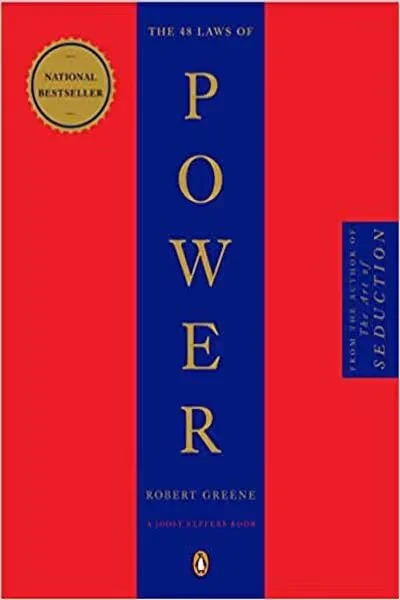 1998The 48 Laws of Power
 2001The Art of Seduction
 2006The 33 Strategies of War
 2009The 50th Law
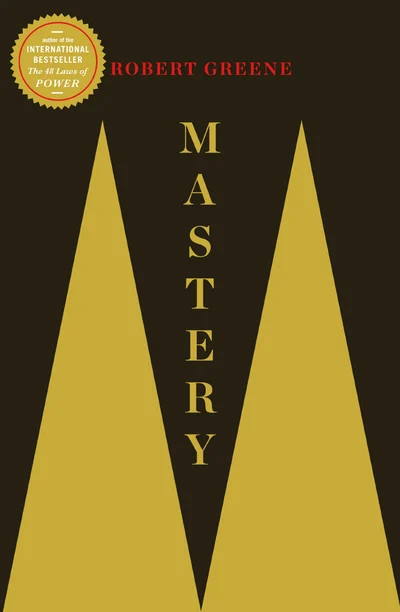 2012Mastery
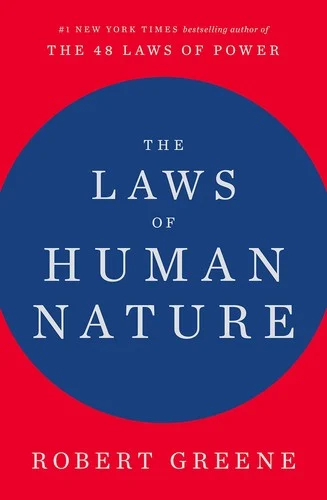 2018The Laws of Human Nature
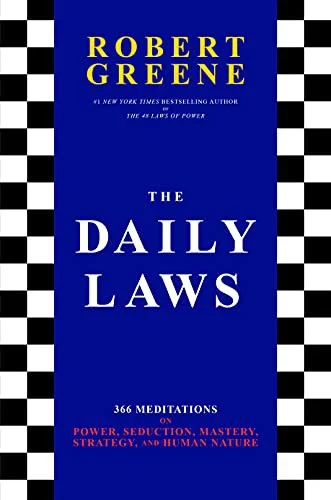 2021The Daily Laws
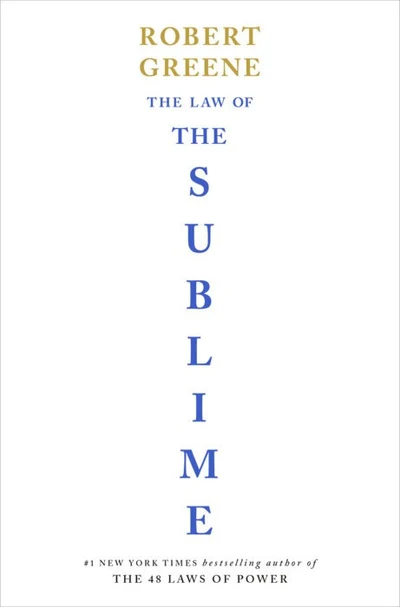 2026The Law of the Sublime
The Law of the Sublime at a glance
| Author | Robert Greene |
| Publisher | Viking (Penguin Random House) |
| Release date | November 10, 2026 |
| Length | 496 pages, 12 chapters |
| Audiobook | Read by Greene, 27 hours 14 minutes (Penguin Audio) |
| Genre | Philosophy, psychology, self-help |
| First week | No. 5, NYT Advice, How-To & Misc.; No. 9, Publishers Weekly hardcover nonfiction |
| On Readlink | See the book |
What The Law of the Sublime is about

Greene's earlier books are about getting what you want from other people. This one is about getting out of your own head. Drawing on science, mythology, history, nature and art, he argues that the sublime, the feeling of touching something far bigger than yourself, is a basic human need, and that modern life (screens, routines, the same small worries on a loop) starves us of it.
The title's "law" is singular on purpose. Greene told the How I Write newsletter that it refers to one deep need for transcendence, which he ties to our awareness that we will die, not to a list of numbered rules. The 12 chapters are 12 ways out of ordinary perception:
| # | Chapter | Kind of sublime |
|---|---|---|
| 1 | Expand the Mind to Its Furthest Reaches | The Cosmic Sublime |
| 2 | Awaken to the Strangeness of Being Alive | The Biological Sublime |
| 3 | Return to Our Origins | The Pagan Sublime |
| 4 | Return to Your Origins | The Childhood Sublime |
| 5 | Venture into the Fringes of Human Consciousness | The Neural Sublime |
| 6 | Enter Alien Minds | The Interspecies Sublime |
| 7 | Escape the Prison of the Ego | Love Sublime |
| 8 | Journey Past the Limits of Linear Time | The Historical Sublime |
| 9 | Descend into the Second Self Within You | The Daemon Sublime |
| 10 | Disorder the Senses | The Aesthetic Sublime |
| 11 | Measure Yourself Against the Immense and the Impossible | The Dynamical Sublime |
| 12 | Peer Across the Threshold | Death Sublime |
As in his other books, the argument runs on stories: ancient Greek pagan rituals, Charles Lindbergh's solo flight across the Atlantic, Madame Roland facing the guillotine, Socrates, Ingrid Bergman. Greene pairs the stories with exercises and meditations. One of the simplest, singled out by Publishers Weekly: look up at a clear sky and try to take in how vast it really is. The back of the book even has a "Sublime Playlist."
Early reviews were positive. Booklist read it as a work of philosophy rather than ordinary self-help and praised it for readers willing to take their time. Publishers Weekly found the stories vivid and the book ambitious, though it thought some of the mystical passages went on too long.
Why Robert Greene wrote it
Greene says he had been thinking about a book on the sublime for about 20 years. His first idea was to travel and chase extraordinary experiences himself. Then, in 2018, he had a stroke that nearly killed him. Afterwards, ordinary sights from his window looked newly intense. "Everything seemed kind of wonderful and fantastic," he told The New York Times.
That was the push. "Now is the time to write this book. You couldn't write the book before this," he remembers telling himself, on the Finding Mastery podcast. The stroke limited his mobility and his ability to type, so he wrote the book by hand, over about seven years.
Who is Robert Greene?
Robert Greene was born in Los Angeles in 1959. He studied at UC Berkeley and took a degree in classical studies at the University of Wisconsin–Madison, and the ancient history he studied there runs through all his books. Before he wrote anything famous he worked, by his own count, about 80 jobs: hotel receptionist in Paris, translator, construction worker, magazine editor, Hollywood story developer.
In 1995, while he was working at Fabrica, an arts school near Venice, he met the Dutch book producer Joost Elffers. On a walk, Greene talked about Louis XIV's court and Machiavelli, and the two settled on a book about power. That became The 48 Laws of Power. His UK publisher, Profile Books, says his books have sold more than 10 million copies worldwide, and he now also hosts The Robert Greene Podcast. You can browse everything he has written on his author page and the books he reads in Robert Greene's library.
Robert Greene's books in order
All eight, with their original US publishers:
| Year | Book | Publisher | What it's about |
|---|---|---|---|
| 1998 | The 48 Laws of Power | Viking | 48 rules for gaining power and defending yourself against it, told through history |
| 2001 | The Art of Seduction | Viking | The types of seducers and the tactics of attraction and persuasion |
| 2006 | The 33 Strategies of War | Viking | Military strategy applied to conflict and competition in everyday life |
| 2009 | The 50th Law | HarperStudio | Acting without fear, written with 50 Cent |
| 2012 | Mastery | Viking | How people build exceptional skill: apprenticeship, practice, creativity |
| 2018 | The Laws of Human Nature | Viking | The hidden motives behind behavior, and how to read people |
| 2021 | The Daily Laws | Viking | 366 short daily readings drawn from his earlier books, plus new material |
| 2026 | The Law of the Sublime | Viking | Awe, wonder and the experiences that lift us out of routine |
Which Robert Greene book should I read first?
Greene answered this himself in a 2022 clip on his channel. The Laws of Human Nature is a good general start if you don't mind a long book (or take it on audio). Otherwise, pick by what you need:
- Dealing with difficult or toxic people: The 48 Laws of Power
- Dating and attraction: The Art of Seduction
- Starting a business: The 33 Strategies of War
- Starting a career with no clear direction: Mastery
- Fear holding you back: The 50th Law
The Law of the Sublime came after that clip. Read it whenever the others start to feel like too much strategy: it is the most personal and the least tactical book he has written. If you want to sample his earlier books first, The Daily Laws gives you one page a day.
The books Robert Greene recommends
Greene's books are built out of other books, and he talks about his favourites often. Readlink keeps Robert Greene's library: 202 books he has recommended or written about, from ancient history to modern biography. Here are the ones he comes back to most.
 ThucydidesHistory of the Peloponnesian War
 MachiavelliThe Prince
 NietzscheThe Gay Science
 MontaigneThe Essays
 Sun TzuThe Art of War
 ClausewitzOn War
 Marcus AureliusMeditations
 Stefan ZweigJoseph Fouché
The three that shaped him. In a video on his own channel, Greene names History of the Peloponnesian War by Thucydides, The Prince by Niccolò Machiavelli and Journey to Ixtlan by Carlos Castaneda as the books that influenced him most. Machiavelli runs through The 48 Laws of Power (Greene has said Machiavelli's Discourses on Livy may be his favourite of the two).
Philosophers he keeps rereading. Friedrich Nietzsche is a longtime favourite, and The Gay Science is on his recommended list. He recommends Michel de Montaigne's Essays for their reflections on mortality, which is the subject of the Sublime's last chapter. He also admires Arthur Schopenhauer and Baltasar Gracián, whose maxims he used in The 48 Laws.
Strategy classics. The 33 Strategies of War leans on The Art of War by Sun Tzu and On War by Carl von Clausewitz, and both are on his Readlink shelf, along with Meditations by Marcus Aurelius.
Books that shaped The Law of the Sublime. In a research video, Greene says Speak, Memory, Vladimir Nabokov's memoir, was a major source for the childhood chapter. He also used The Doors of Perception by Aldous Huxley, J. A. Baker's The Peregrine (a man trying to see the world as a falcon does, which feeds the interspecies chapter), Lyanda Lynn Haupt's Mozart's Starling and An Immense World by Ed Yong.
Biography and history. His library also holds Joseph Fouché by Stefan Zweig, a portrait of the great survivor of the French Revolution, and The Power Broker by Robert A. Caro, the classic study of how one man took power in New York. In other videos on the books that shaped him, he has named Tacitus, Laclos's Dangerous Liaisons, Murasaki Shikibu's The Tale of Genji, Musashi's The Book of Five Rings and Dostoevsky's Demons.
If you like where the Sublime goes, two other shelves on Readlink are worth a look: Rick Rubin's The Creative Act is a book about awe and attention from a music producer, and Ryan Holiday, Greene's former research assistant, keeps a library full of the Stoics.
Read Robert Greene on Readlink
Greene's books are long, dense and made to be reread, and they are better with somewhere to put what you underline. Readlink, the all-in-one reading app, keeps all of it in one place:
- Track the whole shelf. Add all eight books to your library, log pages as you go, and see what you've finished.
- Keep the line that stopped you. Save passages with your own notes in Notes & Highlights, organised by chapter. Handy for a 496-page book you'll come back to.
- Read your own copies. Open ebooks and PDFs you own in the app, with highlights and notes kept alongside everything else.
- Ask your books. AI reading chats answer from the books and notes in your library: ask which of the 48 laws applies to your situation, or what Greene means by the Daemon Sublime. Free accounts get 10 messages a day.
- Browse the libraries of public figures. Robert Greene's 202 books are one of about 3,500 celebrity libraries, from 50 Cent to Rick Rubin.
Fiction or non-fiction, it all sits in one app. Moving from another tracker? Our Goodreads alternatives guide covers importing your library. And if the Sublime leaves you wanting more slow, big-question reading, start with our philosophy books for beginners or the books about focus that help you take your attention back.
Sources
- The Law of the Sublime, Penguin Random House
- Advice, How-To & Miscellaneous, November 29, 2026, The New York Times
- Robert Greene profile, Alexandra Alter, The New York Times
- Hardcover Frontlist Nonfiction, November 23, 2026, Publishers Weekly
- The Law of the Sublime review, Publishers Weekly
- Booklist review, via Nashville Public Library
- Robert Greene on Finding Mastery, Finding Mastery
- Robert Greene: The Unwritten Laws, How I Write
- Robert Greene, Profile Books
- What is the right order to read my books? and Research for The Sublime, Robert Greene on YouTube


