

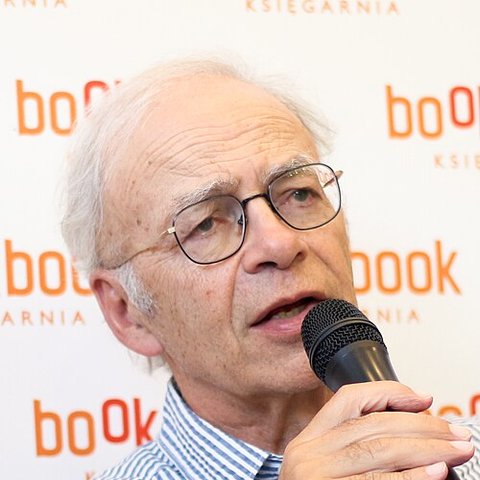
 Author
Peter Singer
Peter Albert David Singer (born 6 July 1946) is an Australian moral philosopher who is Emeritus Ira W. DeCamp Professor of Bioethics at Princeton University. Singer's work specialises in applied ethics, approaching the subject from a secular, utilitarian perspective. His book Animal Liberation (1975) criticized intensive animal farming and speciesism, and shaped the animal rights movement. His essay "Famine, Affluence, and Morality" argues for the moral imperative of donating to help the global poor, using the drowning child analogy. For most of his career he was a preference utilitarian. He revealed in The Point of View of the Universe (2014), co-authored with Katarzyna de Lazari-Radek, that he had become a hedonistic utilitarian. His books The Life You Can Save (2009) and The Most Good You Can Do (2015) are influential in the effective altruism movement. On two occasions, Singer served as chair of the philosophy department at Monash University, where he founded its Centre for Human Bioethics. In 1996, he stood unsuccessfully as a Greens candidate for the Australian Senate. In 2004, Singer was recognised as the Australian Humanist of the Year by the Council of Australian Humanist Societies. In 2005 The Sydney Morning Herald placed him among Australia's ten most influential public intellectuals. Singer is a co-founder of Animals Australia and the founder of the non-profit organisation The Life You Can Save.
Get new book alerts for Peter in the app.


Books by Peter Singer
Every published title we have in the catalogue, ordered by their library.

Animal Liberation
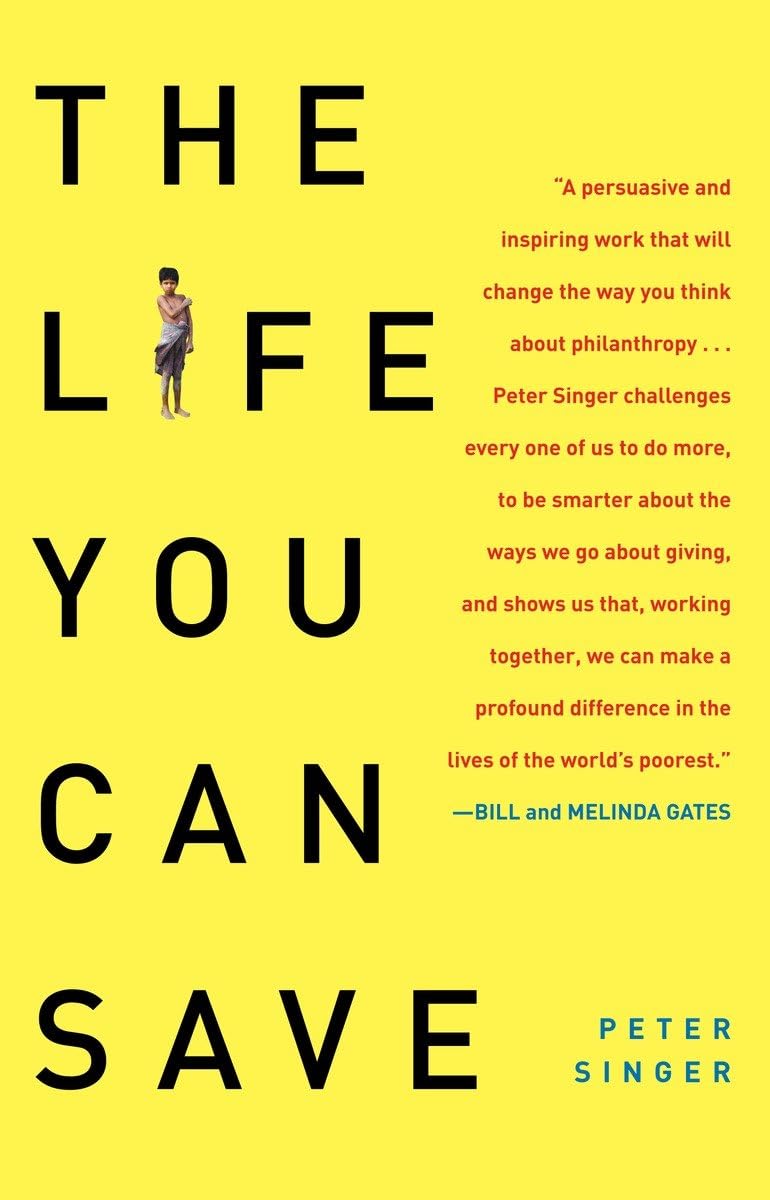
The Life You Can Save
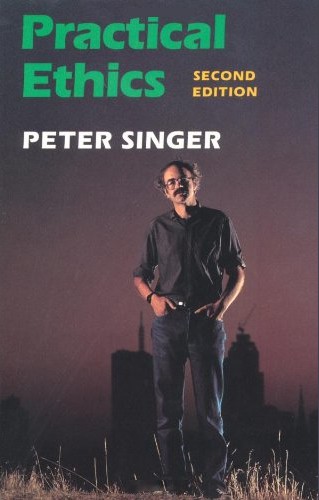
Practical Ethics
Marx
Hegel

Ethics in the Real World
The Most Good You Can Do

The Way We Eat
Writings on an Ethical Life

The Expanding Circle
Famine, Affluence, and Morality

Rethinking life & death
One world

Animal Liberation Now
How are we to live?

Utilitarianism

Darwinian Left

Pushing Time Away

Bioethics
In Defense of Animals

Ethics

Making babies

The president of good & evil
Eating

One World Now

The Great ape project

Why Vegan?
Buddhist and the Ethicist

Bioethics

10th Anniversary Edition the Life You Can Save

Encyclopedia of Applied Ethics

Animal rights and human obligations

Democracy and disobedience

A Companion to Ethics

Applied ethics

Ethics Into Action

Ethics of Killing Animals

The animal liberation movement

Cambridge Textbook of Bioethics

Stem Cell Research

Should the Baby Live?

Henry Cort: The Great Finer
Companion to Ethics
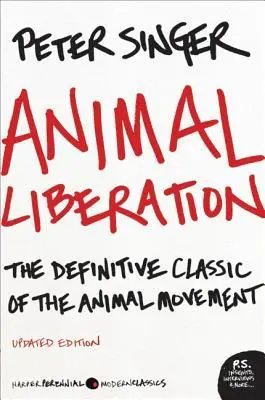
Hayvan Özgürlesmesi

Financial Remedies under the Family Procedure Rules

Ética en acción

The Moral of the Story

Ética para el mundo real : 83 artículos sobre cosas que importan

Companion to Bioethics
More authors
Writers readers often explore alongside this one.
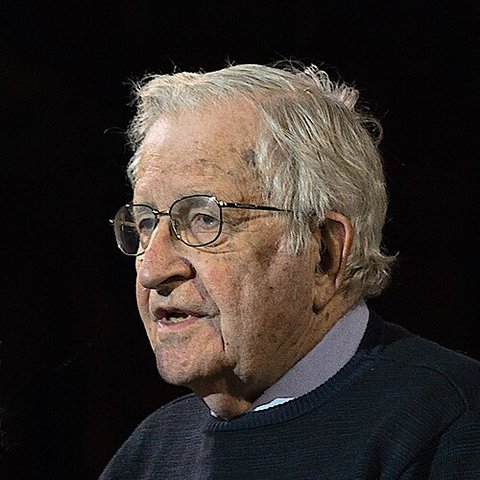 Noam ChomskyAvram Noam Chomsky (born December 7, 1928) is an American intellectual, philosopher, linguist, political activist, and social critic. Sometimes called "the father of modern linguistics", Chomsky is also a major figure in analytic philosophy and one of the founders of the field of cognitive science. He is a laureate professor of linguistics at the University of Arizona and an institute professor emeritus at the Massachusetts Institute of Technology (MIT).
Among the most cited living authors, Chomsky has written more than 150 books on topics such as linguistics, war, and politics. In addition to his work in linguistics, since the 1960s, Chomsky has been an influential voice on the American Left as a consistent critic of the foreign policy of the United States, contemporary capitalism, and corporatocracy.
Born to immigrant Ashkenazi Jews in Philadelphia, Chomsky developed an early interest in anarchism from alternative bookstores in New York City. He studied at the University of Pennsylvania. During his postgraduate work in the Harvard Society of Fellows, Chomsky developed the theory of transformational grammar for which he earned his doctorate in 1955. That year he began teaching at MIT, and in 1957 emerged as a significant figure in linguistics with his landmark work Syntactic Structures, which played a major role in remodeling the study of language.
From 1958 to 1959 Chomsky was a National Science Foundation fellow at the Institute for Advanced Study. He created or co-created the universal grammar theory, the generative grammar theory, the Chomsky hierarchy, and the minimalist program. Chomsky also played a pivotal role in the decline of linguistic behaviorism, and was particularly critical of the work of B. F. Skinner.
An outspoken opponent of U.S. involvement in the Vietnam War, which he saw as an act of American imperialism, in 1967 Chomsky rose to national attention for his anti-war essay "The Responsibility of Intellectuals". Becoming associated with the New Left, he was arrested multiple times for his activism and placed on President Richard Nixon's list of political opponents. As his work in linguistics gained prominence and influence during the 1960s, it fomented the linguistics wars. In collaboration with Edward S. Herman, Chomsky later articulated the propaganda model of media criticism in Manufacturing Consent, and worked to expose the Indonesian occupation of East Timor.
Chomsky's defense of unconditional freedom of speech, including that of Holocaust denial, generated significant controversy in the Faurisson affair of the 1980s. Chomsky's commentary on the Cambodian genocide and the Bosnian genocide also generated controversy. Since retiring from active teaching at MIT, he has continued his vocal political activism, including opposing the 2003 invasion of Iraq and supporting the Occupy movement. An anti-Zionist, Chomsky considers Israel's treatment of Palestinians to be worse than South African–style apartheid, and criticizes U.S. support for Israel.
Chomsky is widely recognized as having helped to spark the cognitive revolution in the human sciences, contributing to the development of a new cognitivistic framework for the study of language and the mind. Chomsky remains a leading critic of U.S. foreign policy, contemporary capitalism, U.S. involvement and Israel's role in the Israeli–Palestinian conflict, and mass media. Chomsky and his ideas remain highly influential in the anti-capitalist and anti-imperialist movements.
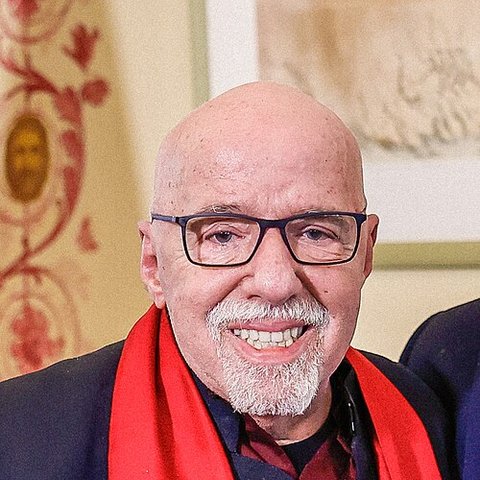 Paulo CoelhoPaulo Coelho de Souza ( KWEL-yoo, koo-EL-yoo, -yoh, Portuguese: [ˈpawlu kuˈeʎu]; born 24 August 1947) is a Brazilian lyricist and novelist. He has been a member of the Brazilian Academy of Letters since 2002. His 1988 novel The Alchemist is an international best-seller.
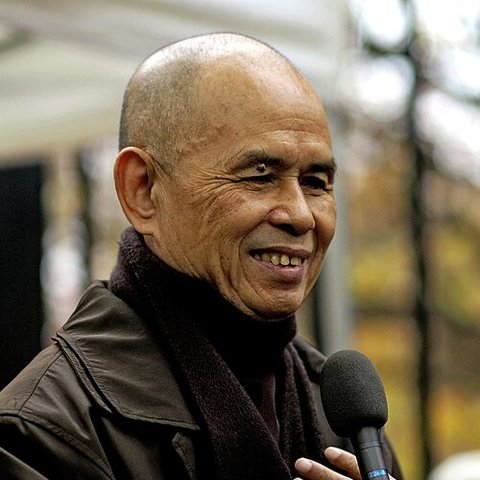 Thích Nhất HạnhThích Nhất Hạnh was a Vietnamese Thiền Buddhist monk, peace activist, prolific author, poet, and teacher, who founded the Plum Village Tradition, historically recognized as the main inspiration for engaged Buddhism. Known as the "father of mindfulness", Nhất Hạnh was a major influence on Western practices of Buddhism.
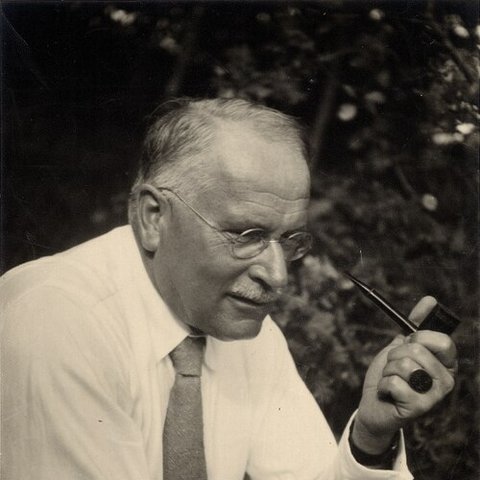 Carl JungCarl Gustav Jung was a Swiss psychiatrist, psychotherapist, and psychologist who founded the school of analytical psychology. He was a prolific author of over twenty books, illustrator, correspondent, and academic, best known for his concept of archetypes. Widely considered one of the most influential psychologists of all time, Jung's work has fostered not only scholarship, but also popular interest. His work has been influential in the fields of psychiatry, anthropology, archaeology, literature, philosophy, psychology, and religious studies.
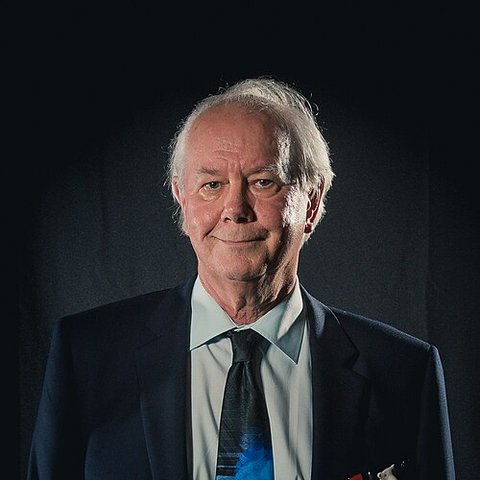 Ian StewartIan Andrew Robert Stewart (18 July 1938 – 12 December 1985) was a Scottish keyboardist and co-founder of the Rolling Stones. He was removed from the lineup in May 1963 at the request of manager Andrew Loog Oldham who felt he did not fit the band's image. He remained as road manager and pianist for over two decades until his death, and was posthumously inducted into the Rock and Roll Hall of Fame along with the rest of the band in 1989.
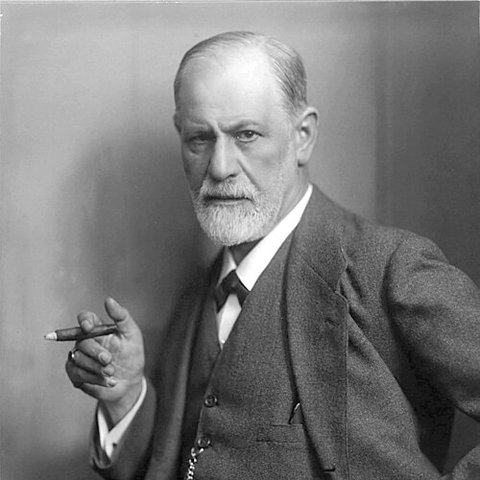 Sigmund FreudSigmund Freud was an Austrian neurologist and the founder of psychoanalysis, a clinical method for evaluating and treating pathologies arising from conflicts in the psyche through dialogue between patient and psychoanalyst, and the distinctive theory of mind and human agency it posits.
